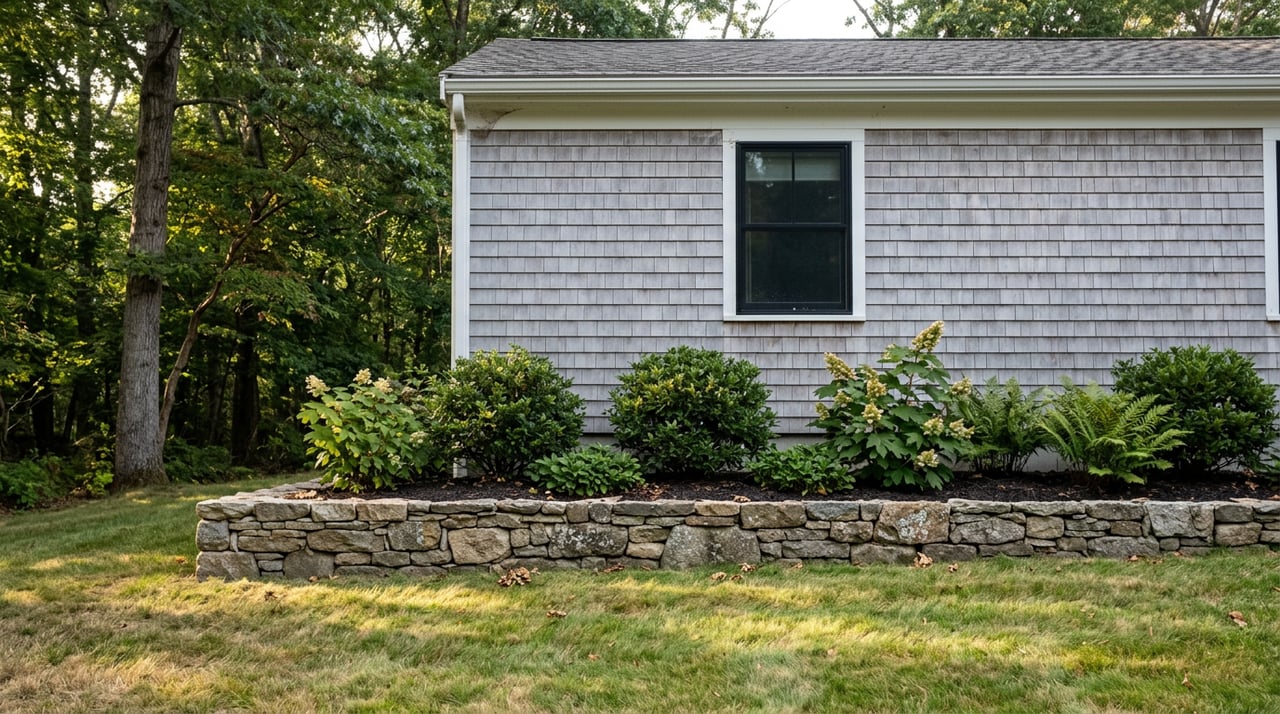
Walk into a five-bedroom colonial in Weston and the listing will tell you it has five bedrooms. The septic file at the health district might disagree. And in a town where homes commonly rely on private wells and private septic systems rather than municipal hookups, that disagreement is the one that actually governs what you can legally do with the house.
Most home-buying guides treat well and septic systems as an inspection checkbox: order the test, wait for the report, move on. In Weston, that framing gets the mechanism backwards. The well and septic aren't a pass-fail gate you clear once. They're a set of physical constraints baked into the property itself, and the paperwork behind them shapes financing timelines, renovation plans, and what you can eventually resell.
A Town Without a Water Bill
Weston's single-family homes commonly rely on private wells and private septic systems rather than a town water main or a sewer line. For a household on that setup, water supply and wastewater disposal are its own responsibility, indefinitely. That single fact changes the shape of a Weston purchase compared to a home in a town with municipal utilities.
It also means the standard Connecticut purchase contract carries a rider that homes on public water never need: a well and septic contingency, arranged and paid for by the buyer, with its own contingency deadline separate from the general home inspection. Skimming past that rider because it looks like boilerplate is the first mistake buyers make in this market.
What the Flow Test Actually Proves
A well flow test measures how many gallons per minute the well can sustain, usually over a window of 45 minutes to two hours depending on the inspector. The state's baseline recommendation is a minimum yield of one gallon per minute, but that floor is rarely enough to satisfy a lender or a household.
Here's where the numbers that show up in practice diverge from the numbers that matter for financing:
| Standard | Typical Threshold | Who Enforces It |
|---|---|---|
| Connecticut state guidance | 1 GPM minimum | Statutory floor, rarely sufficient on its own |
| Common inspector pass/fail bar | 3 to 3.5 GPM sustained | Standard home inspection contingency |
| FHA and VA financing | 3 GPM per dwelling unit | Required for government-backed loans to close |
| Comfortable daily household use | 4 to 5 GPM | What well companies generally recommend for a family |
A well can clear the basic inspection standard and still sit right at the edge of what an FHA or VA loan requires. If the yield comes in short, lenders will sometimes accept a storage tank as a workaround, but that's a negotiation to have before your contingency date closes, not after.
There's a quieter consequence buyers underestimate: a failing or borderline water test doesn't just threaten the deal, it adds real time to it. Retesting, treatment installation, and a second round of lab results can stretch a closing timeline by one to three weeks. If your rate lock or your moving date has no cushion, that's the moment it gets tested.
Bedrooms Aren't What You Think They Are
Here's the mechanism that catches almost everyone off guard, including buyers who've done this before in a town with sewer service.
A septic system isn't sized for square footage or bathroom count. It's sized for permitted bedrooms, because bedroom count is the proxy Connecticut's public health code uses to estimate design flow, the volume of wastewater the system is engineered to handle each day. That number gets fixed at the time the septic system is permitted and stays on file with the local health authority indefinitely.
A well that passes today can still fail your mortgage.
This creates a gap that a walkthrough will never reveal. A house can have five rooms that function as bedrooms and still carry a septic permit rated for three. Nothing about the plumbing, the layout, or the listing description tells you which is true. The only way to know is to pull the health district file and check the permitted design flow against how the seller is marketing the house.
The practical stakes show up later, not at closing. If you buy a "five-bedroom" home permitted for three and later want to convert a den into a legal bedroom, or simply want documentation to match reality for a future resale, you're not filling out paperwork. You're potentially triggering a system capacity review, and if the existing septic can't support the higher design flow, an upgrade or replacement before the change is legal to use.
What Connecticut Groundwater Actually Contains
Private well water in Connecticut isn't tested by any federal agency on a recurring basis. Homeowners are responsible for their own testing, and a mortgage-required water test at the time of sale is not mandated by state law. It's a lender condition, not a legal requirement, and it doesn't automatically cover every contaminant worth knowing about.
The basic panel most inspectors run covers total coliform bacteria, E. coli, and nitrates, the indicators most directly tied to septic contamination or surface intrusion. Connecticut's own guidance goes further and recommends testing for arsenic, uranium, and radon at least once, with retesting roughly every five years, because these occur naturally in the state's bedrock groundwater rather than from any obvious surface source. A statewide study of private bedrock wells found that close to 4 percent of samples exceeded the EPA standard for arsenic and nearly 5 percent exceeded the standard for uranium. Neither of those numbers is something a basic pass-fail flow test or bacteria panel would ever catch.
Nitrate deserves specific attention in a well-and-septic town like Weston, since elevated levels often trace back to septic proximity rather than agricultural runoff. If a property's septic system sits close to its own well, or close to a neighbor's, that's a fair question to raise before you're past your contingency date, not after you've moved in.
The File Already Has a History
Weston doesn't run its own health department. Water, septic, and food-service permitting for the town falls under the Aspetuck Health District, which also covers Easton and Westport. That's the office holding the as-built septic drawings, prior permits, percolation test results, and any repair or variance history for a given address, and it's the first stop for any buyer trying to verify the permitted bedroom count before writing an offer.
One detail worth knowing before you order your own test: results from a private well inspection conducted within six months of a sale are required to be reported to the municipal health authority. That means the flow test and water sample you commission this month become part of the town's permanent record, the same record a future buyer's agent can request when this house sells again. It also means that if the property has changed hands recently, there may already be a prior sale-related test sitting in the file, worth pulling before you spend money duplicating it.
A Few Questions Worth Asking Before You Waive Anything
Does a passing flow test mean the well is fine? It means the well cleared whatever threshold your inspector or lender used that day. Seasonal drought, nearby wells drawing from the same aquifer, and pump wear can all change yield later. A pass is a snapshot, not a guarantee.
Is a well or septic inspection legally required to close? No. Connecticut doesn't mandate either by law. Lenders frequently do, particularly for FHA and VA financing, and any experienced buyer should treat it as effectively required regardless of loan type.
What happens if the septic system is a cesspool? Cesspools, where the tank and leaching function happen in one combined unit, are prohibited under current health code and typically require replacement before or shortly after a sale. Treat a confirmed cesspool as a full-replacement line item in your offer, not a footnote.
Where This Leaves You
The number that matters most in a Weston contract isn't the asking price per square foot. It's the permitted bedroom count sitting in a file at the Aspetuck Health District, quietly setting the ceiling on what the house can legally support long after your inspection contingency expires.
If you're weighing an offer on a Weston property and want a second set of eyes on the well and septic file before your contingency date closes, reach out to Lovisa Wisdom for a walkthrough of what the town's records actually say. And if you already own here and are wondering how your own system's history factors into your next move, start with a Get Your Instant Home Valuation to see where you stand.